How much does a Kenya safari cost?
For the luxury, tailor-made trips we arrange at Kenya Safari Company, around £700 per person per night on safari is a useful starting allowance. For a high-quality Kenyan beach stay, allow around £400 per person per night. More exclusive camps, premium dates and private residences can cost substantially more.
At those starting benchmarks, seven safari nights come to £4,900 per person. Four safari nights followed by six beach nights comes to £5,200 per person, before separately priced flights, transfers and other extras. These calculations help establish a budget; they are not complete holiday quotations.
There are less expensive ways to visit Kenya, including group departures and simpler accommodation. Our specialism is luxury travel. I would rather explain what makes a well-planned safari worth its price than suggest that one daily average represents every Kenyan holiday.
My starting point is the experience you want: perhaps patient big-cat sightings in the Mara, rhino and walking in Laikipia, or a few nights on safari followed by Lamu. The route, dates and guiding arrangements come before the headline price.
A practical Kenya safari pricing guide
These examples use our starting allowances, in GBP, for two adults sharing one room or tent. There is no specific travel month, available camp offer or priced departure behind them. They are initial planning subtotals, rather than guaranteed rates or market-wide averages.
| Example stay | Calculation per person | Subtotal per person | Subtotal for two |
|---|---|---|---|
| Four safari nights | 4 × £700 | £2,800 | £5,600 |
| Seven safari nights | 7 × £700 | £4,900 | £9,800 |
| Four safari + six beach nights | £2,800 + £2,400 | £5,200 | £10,400 |
| Seven safari + five beach nights | £4,900 + £2,000 | £6,900 | £13,800 |
Safari allowance: accommodation, meals, standard camp game-viewing activities and an allowance for applicable park or conservancy fees. The quote must confirm the actual charges and whether guiding is private or shared. Do not assume every camp fits this starting budget.
Beach allowance: accommodation and a provisional meal allowance. Board basis, drinks and activities vary considerably, especially between a coastal hotel and an exclusive-use villa.
Excluded from these subtotals: international and domestic flights, airport and inter-camp transfers, additional Nairobi nights, private-vehicle supplements where applicable, premium activities, entry authorisations, insurance, separately payable local charges, tips and personal spending. Some packages bundle transport or fees; check before adding anything twice.
Per night is different from per day
A seven-night safari normally spans eight calendar days. Arrival and departure days may contain relatively little game viewing. Compare nights, usable wildlife time and the full inclusions rather than dividing a package by its advertised number of days.
What a travel blog can — and cannot — tell you about price
A blogger’s account can be useful evidence of one holiday: what they paid, where they stayed and what they enjoyed. It is not necessarily a reliable guide to the whole Kenyan safari market.
A visitor who has stayed at a handful of camps may have little basis for comparing guiding, conservancy arrangements, room categories and different operators. Collecting several quotations does not establish that the underlying services are equivalent.
A good specialist works across camps, seasons and different types of itinerary, drawing on supplier knowledge and feedback from many travellers. That breadth matters when advising on a substantial holiday investment. Equally, a travel-agent title is not proof of expertise, and some bloggers have excellent destination knowledge.
Look at how recommendations are funded. Hosted stays, discounted trips and affiliate arrangements do not automatically invalidate an article, but a reported price may not be available to an ordinary paying guest. Specialists have commercial relationships too: ask us why we recommend a camp, what alternatives we considered and what the price includes.
Is booking a Kenya safari directly or locally cheaper?
Sometimes. There is no automatic saving simply because a company is based in Kenya, or because you book directly with a camp. Excellent Kenyan operators and overseas specialists can both offer strong value.
How commission and trade rates work
A supplier may charge its published retail price and pay an agreed commission to the booking specialist. Alternatively, it may offer a net trade rate, to which the specialist adds a margin. In the first arrangement, the commission can sit within the retail price rather than being an extra charge to the traveller.
For illustration, a camp could sell a stay directly for £1,000 or a specialist could sell the same stay for £1,000 and receive a commission from the camp. That explains the mechanism; it is not a statement of our commission on any booking.
Portfolio combinations, longer-stay offers and honeymoon terms can improve the complete price. Some offers are also available directly. The value lies in finding the right combination and applying its conditions correctly, not claiming every discount is exclusive.
A local operator running its own road safari may offer a very competitive price. An overseas specialist may match or improve a multi-camp package. Compare equivalent rooms, guiding, fees, transport, terms and support before deciding which offers better value.
Maasai Mara reserve or conservancy: why the distinction matters
A proposal saying “three nights in the Maasai Mara” does not tell you enough. Establish whether the camp is in the national reserve, the Mara Triangle or an adjoining conservancy, and which areas its activities actually cover.
The reserve contains well-known river-crossing areas and outstanding resident wildlife. A conservancy can offer a different rhythm, with managed tourism density and, where permitted, walks or night drives. Rules and activities vary by conservancy and camp; the label is not a universal package.
Conservancy tourism helps support landowner agreements and wildlife habitat. Those arrangements form part of the cost of staying there. Reserve entry may be additional when visiting from a conservancy, so ask whether such visits are included, how often and how long the drive takes.
For a Migration-focused stay, a cheaper camp far from the relevant river area may save money on paper while costing valuable time. The herds and crossings are never guaranteed. I would choose a location for the wider safari experience, with any crossing a possibility rather than a promise.
Our reserve and conservancy guide explains the practical differences.
Why Kenya safari prices vary so much
Dates and demand
Migration-season demand and school holidays can lift Mara rates; festive dates can also be expensive. Exact rate bands differ between properties, so September or October is not automatically cheaper everywhere. January, February or November may offer useful alternatives depending on the camp and the experience you want.
Lower rates during wetter periods can be attractive, but rainfall, access, camp closures and your tolerance for uncertain conditions matter. Compare the coast separately: a good safari month is not necessarily the best beach month. Our seasonal guide covers both.
Camp style and location
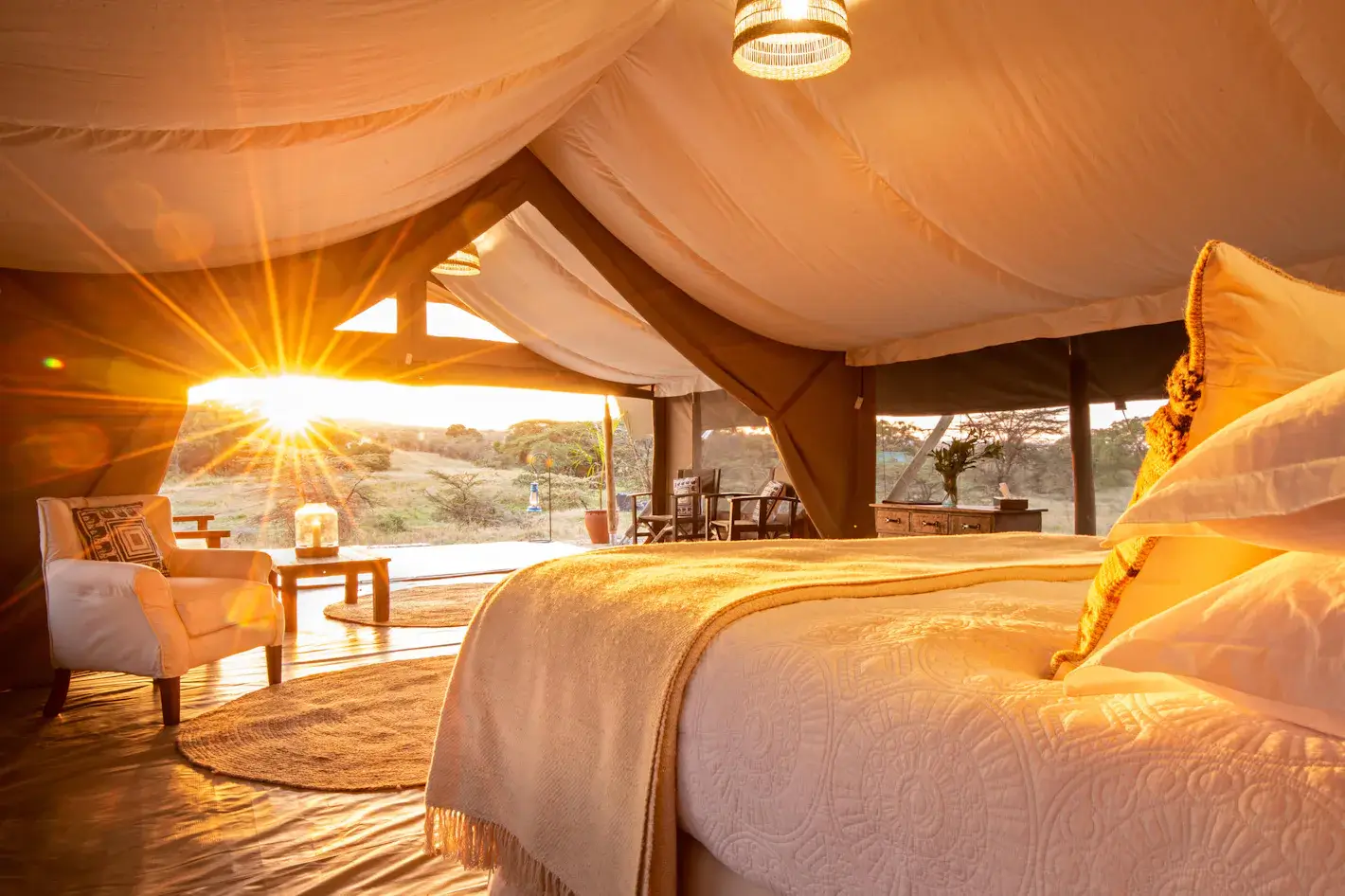
Canvas is not a budget category. A tented suite can offer exceptional comfort, privacy and service, while a solid-walled lodge can be relatively simple. Look beyond room photographs to the setting, guiding, guest numbers and wildlife access.
Fees and remote operations
Park and conservancy charges, staff, vehicle maintenance, food supplies and remote logistics all contribute. Different areas charge differently; a room rate excluding fees is not comparable with a fully costed safari package.
Guides and vehicles
Good guiding changes a safari. Ask about guest numbers in each vehicle, seating, shade and who controls the day’s timings. A private guide can be particularly valuable for families or photographers, but it must be confirmed rather than inferred from “tailor-made”.

Fly-in safari or driving safari: compare time as well as money
Kenya’s light-aircraft network makes it possible to combine wildlife areas without spending whole days on the road. A flight can buy useful time on safari, although it does not automatically make every route better.
Scheduled services can involve intermediate stops, and baggage limits matter. Nairobi’s international airport and Wilson Airport are separate: allow for the actual transfer and connection rather than treating an international arrival as a seamless safari departure.
A private road safari can work well for a coherent route and may offer continuity with one guide. Families and friends share some fixed vehicle costs, but rooms and many fees remain priced per person. Doubling the group does not halve the entire holiday cost.
For a shorter trip I often prefer fewer areas and longer stays. Compare Maasai Mara and Laikipia with Laikipia and Samburu for two different approaches, then choose for your interests rather than the number of park names.
Private guiding, family rooms and exclusive-use houses
A tailor-made itinerary is planned around you; it does not promise private activities at every stop. Many fly-in camps include shared game drives, with a supplement for a private vehicle. Others include private guiding within their standard arrangements. Ask for each stop’s policy in writing.
For families, check children’s ages, room layout and any minimum ages for walks or other activities. A two-bedroom suite is a different product from two separate tents, even when the total number of beds is the same. Child reductions depend on the property, dates and sharing arrangements.
An exclusive-use residence is usually priced around a whole house or minimum occupancy. Its per-person value depends on who is travelling and which services are included. A house can work beautifully for a group, but unused bedrooms do not necessarily reduce the total.
Our exclusive retreats collection explains the different homes; we then check guiding, meals, transport and conservation charges for your party.
What should a Kenya safari and beach holiday cost?
At our starting allowances, four safari nights and six beach nights produce a planning subtotal of £5,200 per person. Seven safari nights and five beach nights produce £6,900. These are calculations using £700 and £400 respectively, not bookable offers.
A beach night generally costs less than a safari night within this planning framework, so the split matters. Two ten-night holidays can have very different prices if one contains four safari nights and the other seven.
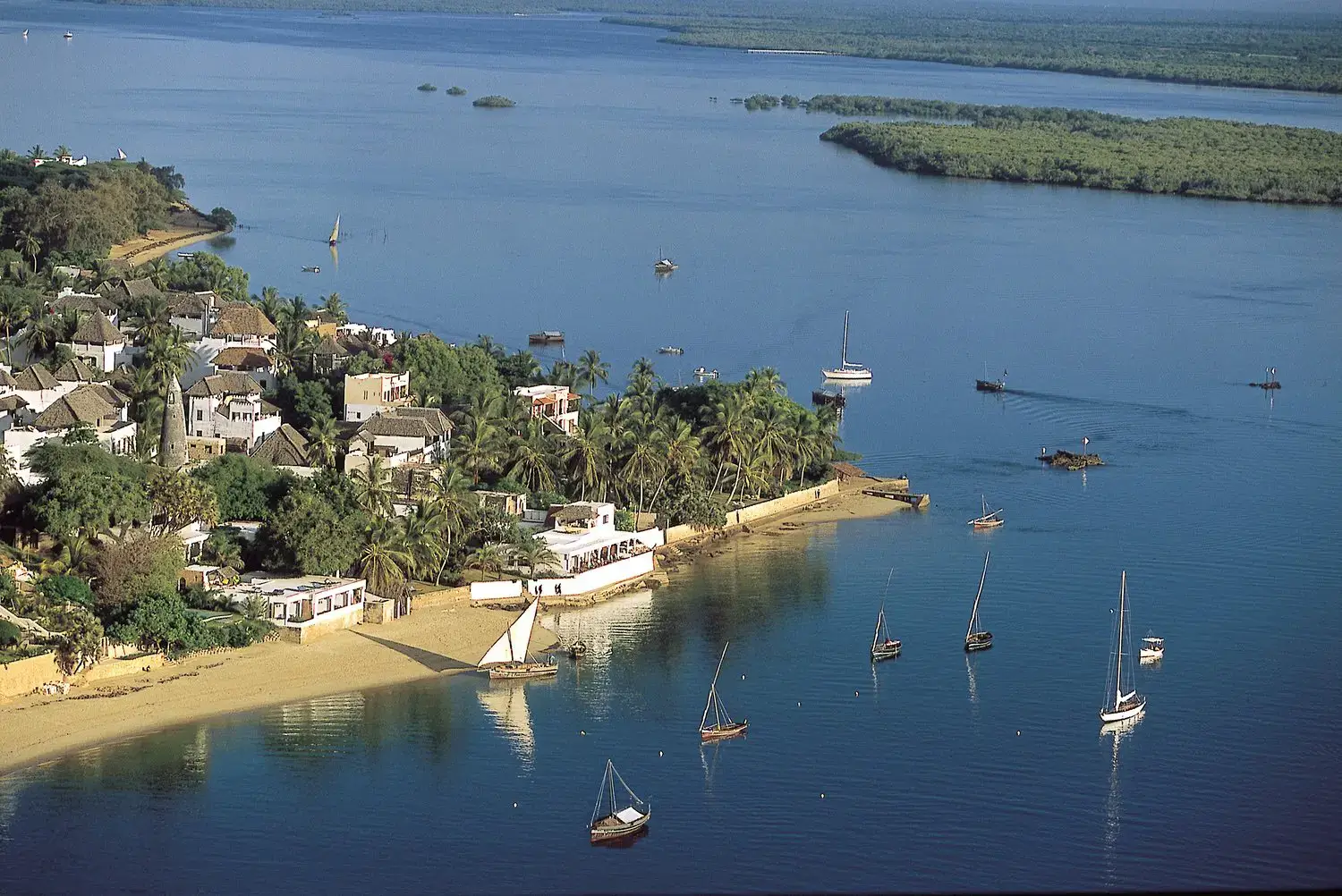
Maasai Mara and Lamu suits travellers looking for a safari followed by a quieter coastal finish. Diani, Watamu and Lamu offer different settings and connections; choose the property and beach character rather than assuming all Indian Ocean stays are interchangeable.
Maasai Mara and Zanzibar adds a second country. Cost the actual air routing, transfers, entry requirements and any mandatory cover or local charges separately. Never assume the headline beach rate includes those arrangements.
On either coast, tidal range, wind, seaweed and swimming conditions vary by location and season. A cheaper beachfront room may not provide the beach experience you had in mind.
When a cheaper quotation involves a real compromise
A lower price can be excellent value. The useful question is what changed to achieve it.
- A camp “near the Mara”: check its exact location, wildlife access and time spent driving to the areas you want.
- A “private safari”: establish whether the phrase covers transfers, game drives or every activity.
- More destinations: count nights and usable safari time, including transfer days.
- A lower nightly rate: check meals, drinks, activities, taxes and protected-area fees.
- A cheaper coastal extension: compare the room category, board basis, beach setting and transfers.
- An attractive house price: check minimum occupancy, exclusive-use terms and what the household team provides.
A higher price is not a guarantee either. An expensive camp in the wrong location can be less suitable than a simpler camp with excellent guiding where you actually want to be.
The extra costs to allow for
Budget for international flights, domestic flights or charters, airport and airstrip transfers, and any Nairobi hotel nights needed for workable connections. Check whether a transfer is already included in a camp package.
Allow for suitable travel insurance and the current entry requirements for every country on your route. Requirements and exemptions depend on your passport and circumstances; use the official application process rather than assuming every traveller pays the same charge.
Tips, balloon flights, spa treatments, premium drinks, shopping and some specialist activities can be additional. Ask whether tipping guidance is per guest, per vehicle or per travelling party. At the coast, confirm meals, drinks, laundry and locally payable accommodation charges.
Prices quoted in different currencies can also move with exchange rates. Check the payment currency, validity of the quotation, card or transfer charges, deposit and cancellation terms before comparing final totals.
Where I would look for better value
I would start with routing and timing before compromising guiding or wildlife access. Spend longer in fewer places; consider dates either side of a camp’s peak rate band; and ask whether compatible properties have a combined-stay offer.
Prioritise the features you will use. A private pool may matter less than an excellent guide, while a private vehicle might transform the experience for a keen photographer. Do not pay for privacy automatically, or dismiss shared activities when the guest numbers and style suit you.
Balance safari and beach nights around your interests. Fewer transfers can save money and improve the pace. Adding nights does not automatically reduce the average price: accommodation and conservation costs continue, and any offer has conditions.
Compare dates, named camps, room categories, occupancy, private or shared guiding, every fee, flight and transfer, and the booking company’s support and protection arrangements. If one total is much lower, ask for a clear explanation of the difference.
Kenya safari cost FAQs
What does a luxury Kenya safari cost for two people?
At our starting allowance of £700 per person per safari night, seven nights give a planning subtotal of £9,800 for two adults sharing. Flights, transfers, arrival nights and other excluded items must be priced separately. Exact camp rates can be substantially higher.
How much is a Kenya safari and beach holiday?
Four safari nights at £700 and six beach nights at £400 give an illustrative subtotal of £5,200 per person. The complete holiday price depends on dates, rooms, guiding, transport and other inclusions.
Are private conservancies worth the extra cost?
They can be, particularly when lower tourism density and varied activities suit your priorities. Compare the specific conservancy, camp location, permitted activities and reserve access rather than assuming every conservancy provides the same experience.
Will booking directly with a Kenyan operator save money?
It may, but there is no automatic saving. Supplier commission arrangements, trade rates and combined-stay offers can allow specialists to match or improve direct pricing. Compare the complete arrangements and terms.
Are tented camps cheaper than lodges?
Not necessarily. Luxury tented camps can be among Kenya’s most exclusive places to stay. Guiding, service, location and privacy tell you more than the material used for the walls.
Is Kenya cheaper than Tanzania for safari?
Not consistently. Our starting planning benchmarks differ, but camps, dates, transport, guiding and fees determine the final price. Compare trips that deliver the experience you want rather than treating either country as a single price category.
Plan your Kenya safari with Ben and the team
Tell us when you would like to travel, who is coming and the budget you are comfortable with. I will help you understand what is realistic, which compromises are sensible and where spending more would make a useful difference.
We build luxury, tailor-made safaris around the experience you want, with clear pricing and an explanation of the choices behind it. Speak to me and the team to start planning, or browse our Kenya itinerary ideas for a starting point.